Research investigation / November 12, 2026

In 2025, 38% of Employed Women Worked at Home on Workdays

The 2025 American Time Use Survey shows a difference in work-at-home participation by sex on days worked. The figures are survey estimates, not a causal explanation or a count of full-time remote workers.

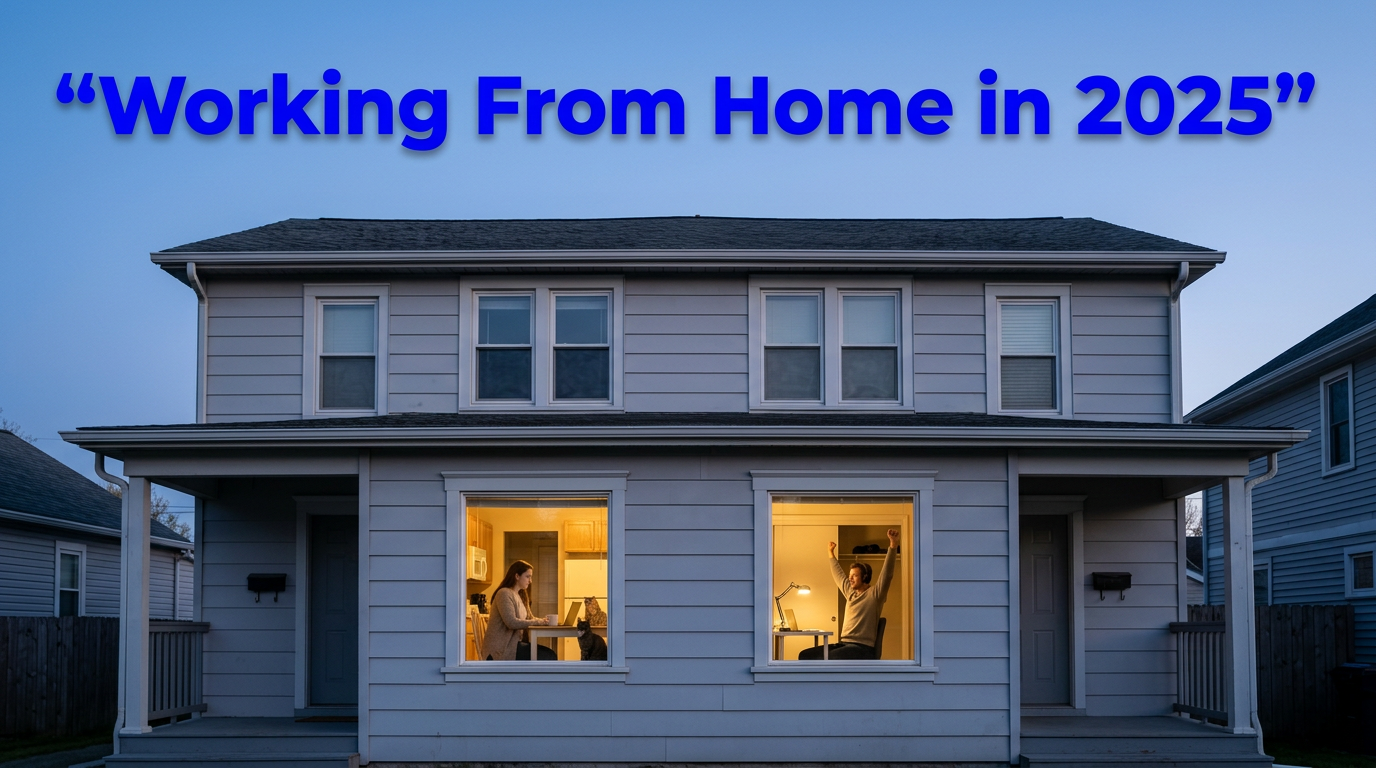
Average-American.net editorial cover showing two illuminated home workspaces at dusk, with the headline Working From Home in 2025; no numerical claims embedded.

Average-American.net 2025 work-at-home editorial cover

Read the research

Question

How did working at home differ between employed women and men on days they worked in 2025?

Claim being tested

BLS reported that 38% of employed women and 31% of employed men did some or all of their work at home on days they worked in 2025, a 7-percentage-point difference.

In 2025, 38% of employed women and 31% of employed men did some or all work at home on days they worked, according to BLS. The difference was 7 percentage points.

Competing story frames

Fact-based response

What the data actually show

SOURCE AND PERIOD — The Bureau of Labor Statistics released its 2025 American Time Use Survey on June 25, 2026. The survey measures how people spent their time on diary days in 2025.

WHAT WAS MEASURED — Among employed people on days they worked, 38% of women and 31% of men performed some or all work at home. The difference is 38 minus 31, or 7 percentage points.

Source data comparison

Work at home on days worked, 2025

Published source data
X-axis: Employed people by sex
Y-axis: Share working at home (%)
Work at home on days worked, 2025. BLS American Time Use Survey 2025. Percent of employed people doing some or all work at home on days worked. These are not full-time remote-work rates.
Category%
Women38%
Men31%

BLS American Time Use Survey 2025. Percent of employed people doing some or all work at home on days worked. These are not full-time remote-work rates.

NOT THE SAME AS FULLY REMOTE — The measure includes doing any work at home on a workday. A respondent may also have worked at a workplace that day. It does not measure permanent remote employment or home-based work every day.

OTHER FACTORS — Occupation, education, family circumstances, work arrangements, and other differences can affect the likelihood of working at home. These survey percentages do not establish why the gap exists.

INTERPRETATION — The denominator is employed people who worked on the diary day, not all women and men or all adults. The values are rounded published percentages; the calculated 7-point gap uses those rounded figures. This national result does not directly measure immigration or policy impacts.